
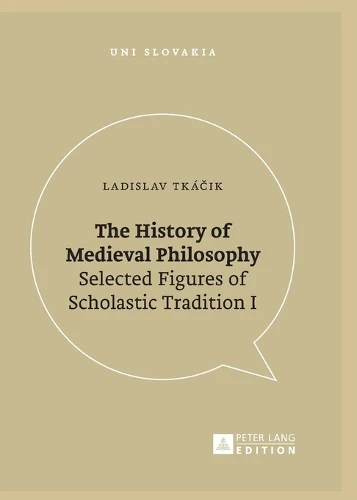
The History of Medieval Philosophy: Selected Figures of Scholastic Tradition I: 8 (Uni Slovakia: Humanities, Social Sciences and Law for Universities
Selected Figures of Scholastic Tradition I
The text presents boundaries and concepts of the Middle Ages and its philosophical and theological thinking. It follows the selected characters of scholastic tradition from 5th to 13th century: Boethius, Pseudo-Dionysius the Areopagite, Johannes Scotus Eriugena, Anselm of Canterbury, Peter Abelard, Albertus Magnus and Thomas Aquinas.
Calling an epoch Middle Age already involves some sort of judgment. But Middle Ages represent a historic period, in which the identity was established, which was denied by the renaissance, modern world and which however is now being discovered again in its sense and beauty. It is a period in which a co-existence between faith and intellect, between ecclesiastical and profane culture was possible. It was a varied living space in which philosophy, mystique and practice could exist side by side. It is a world which is lost today and which we can get a hold of again only by intellectual appropriation.
Product Information
Product Information
Shipping & Returns
Shipping & Returns
Description
Selected Figures of Scholastic Tradition I
The text presents boundaries and concepts of the Middle Ages and its philosophical and theological thinking. It follows the selected characters of scholastic tradition from 5th to 13th century: Boethius, Pseudo-Dionysius the Areopagite, Johannes Scotus Eriugena, Anselm of Canterbury, Peter Abelard, Albertus Magnus and Thomas Aquinas.
Calling an epoch Middle Age already involves some sort of judgment. But Middle Ages represent a historic period, in which the identity was established, which was denied by the renaissance, modern world and which however is now being discovered again in its sense and beauty. It is a period in which a co-existence between faith and intellect, between ecclesiastical and profane culture was possible. It was a varied living space in which philosophy, mystique and practice could exist side by side. It is a world which is lost today and which we can get a hold of again only by intellectual appropriation.